
Why This Matters
Zenodo DOI: 10.5281/zenodo.14946211
Across science and technology, we are increasingly confronted with systems that become complex, interconnected, and fragile at the same time. Some systems adapt and endure; others collapse, stagnate, or become rigid. Filtration Theory proposes a simple but powerful idea for understanding this difference: systems persist by selectively refining uncertainty, not by accumulating structure indiscriminately.
From physical processes to living organisms, from human cognition to artificial intelligence, enduring systems continuously face uncertainty flowing in from their environment. Those that survive are able to filter this uncertainty into coherent, workable forms while discarding what cannot be integrated. Filtration Theory provides a framework for reasoning about when this process remains adaptive, when it becomes brittle, and when it fails.
You do not need to understand the mathematics to grasp the core value of the theory. It offers a way to think clearly about resilience, learning, and long-term stability in a world shaped by entropy, information overload, and accelerating technological change.
Filtration Theory: Conceptual Overview
Across physics, biology, cognition, and technology, a recurring problem appears in different guises: how do ordered, persistent structures arise and endure in a universe governed by entropy? Classical thermodynamics describes the tendency toward disorder, yet the world repeatedly produces stars, cells, minds, cultures, and increasingly complex artificial systems.
Filtration Theory proposes a unifying answer by reframing persistence and complexity as outcomes of selective entropy refinement. Rather than treating order as an accidental by-product of dynamics or evolution, the theory treats it as the consequence of systems acting as filters: processes that suppress incompatible possibilities, concentrate viable structure, and export entropy to their surroundings.
Systems that persist are not those that maximise growth or accumulation, but those that refine uncertainty in ways compatible with energetic, physical, and informational constraints. Order is therefore not created freely; it is paid for through dissipation.
At its core, the theory models systems in terms of probability distributions over possible states. Interaction with the environment induces flows of uncertainty into the system. Filtration processes transform these distributions by reducing internal entropy while exporting entropy externally, ensuring full compliance with the second law of thermodynamics.
Scale Invariance and Hierarchical Structure
Filtration Theory is scale-invariant in form, though not in metric detail. The same mathematical architecture applies at vastly different scales, even though the mechanisms and substrates differ. This allows apparently unrelated phenomena to be analysed within a single framework, without reducing higher-level systems to lower-level descriptions.
The theory further proposes that complexity arises through hierarchical chains of filtration. Early filters constrain physical possibilities, enabling chemical structure. Chemical filters enable biological organisation. Biological filters enable neural systems, which in turn enable cultural and technological filters. Each layer narrows the space of viable states for the next, producing cumulative structure across cosmic time.

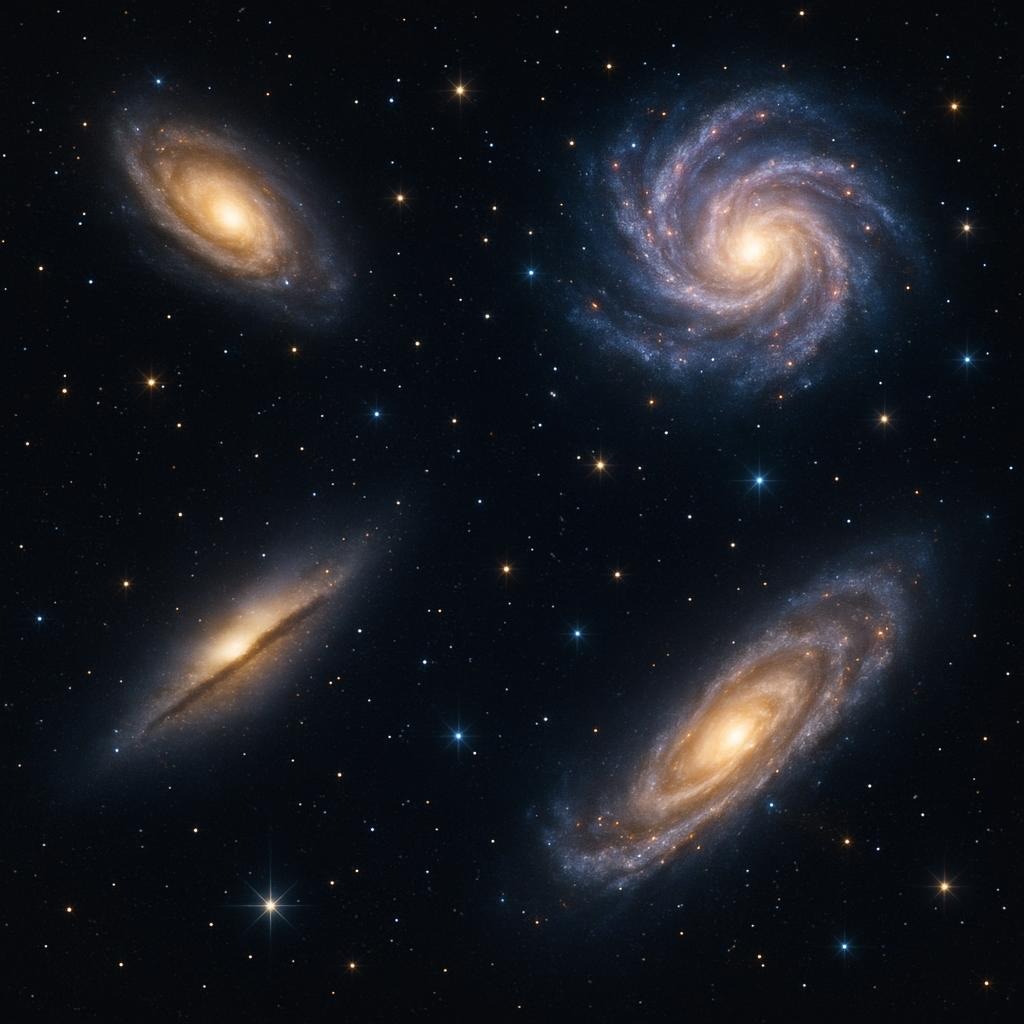
In this view, complexity is neither sudden nor mysterious. It is layered, path-dependent, and contingent on prior constraint refinement.
Persistence Is Not Assumed
A central claim of Filtration Theory is that persistence should not be taken as a primitive assumption. It should be predicted.
The framework introduces the concept of filtration power, which combines the rate at which a system reduces its internal uncertainty with the rate at which it exports entropy to its environment. Systems that persist, adapt, or generalise well tend to operate in regimes where this balance is sustained over relevant timescales.
This perspective reframes familiar failures across domains. Overfitted models reduce uncertainty locally but collapse under new conditions. Rigid institutions suppress variation but lose adaptability. Biological lineages that over-specialise become fragile under environmental change. In each case, failure arises not from entropy reduction itself, but from inefficient or brittle filtration.
What Filtration Theory Helps Navigate
Filtration Theory is not a tool for predicting specific outcomes. Its value lies in providing a navigation framework for reasoning about complex systems under uncertainty. It helps clarify when order remains adaptive rather than fragile, when constraint sharpens structure rather than suppressing diversity, and when systems export entropy efficiently rather than accumulating hidden costs.
These questions are increasingly central in artificial intelligence, institutional design, cognitive science, and scientific theory development itself. By focusing on persistence rather than optimisation alone, Filtration Theory offers a diagnostic lens for long-term robustness across domains.
Relationship to Prior Work
Filtration Theory builds on and formalises ideas introduced in earlier work on the Filtration Principle, which proposed selective constraint as a general driver of structure. The present formulation extends that principle into a full mathematical framework, introducing explicit operators, entropy dynamics, hierarchical composition, and a variational principle for persistence.
It is related to, but distinct from, frameworks such as the Free Energy Principle and theories of dissipative structures. While these models share concerns with nonequilibrium dynamics and self-maintenance, Filtration Theory differs in scope by treating filtration as a general, scale-independent mechanism applicable to physical, biological, cognitive, social, and artificial systems alike.
The Formal Framework
The full mathematical formulation of Filtration Theory, including filtration operators acting on probability measures, entropy-reduction rates, filtration power, hierarchical chains, and falsifiable cross-domain predictions, is presented in an open-access research preprint. That work provides the rigorous foundation underlying the ideas outlined here and is intended for researchers seeking formal definitions, derivations, and empirical test paths.
Closing Perspective
Filtration Theory does not claim to be a final explanation of everything. It offers a structural principle for understanding why some systems endure, adapt, and complexify while others dissolve. By treating order as the outcome of selective entropy refinement rather than passive emergence, it reframes persistence as an active, measurable process.
If validated across domains, this perspective suggests that complexity is not an anomaly in an entropic universe, but one of its most reliable signatures.
Canonical formal framework for Filtration Theory: 10.5281/zenodo.14946211


Leave a Reply